8 guides

A country of quiet mountain towns, prayer flags, and lake reflections at first light.
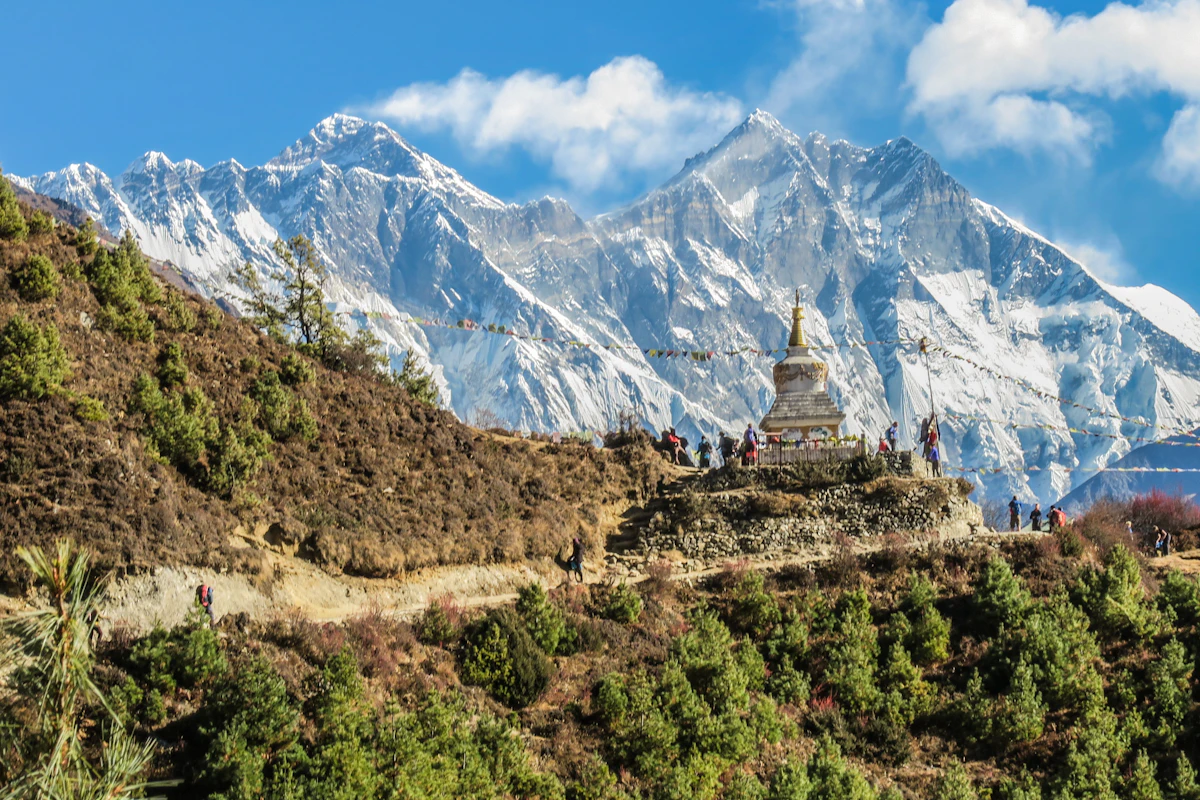
Nepal is small on a map and enormous once you're inside it. Roads climb from paddy fields to alpine forests to bare rock in a matter of hours, and every valley seems to speak its own dialect and cook its own version of the same handful of dishes.
You come for the mountains and stay for the mornings — for milk tea in tin cups, for the low rumble of monasteries waking up, for the way clouds lift off a lake and reveal the Annapurnas as if by accident.
This is a country made for slow travel. Trekkers get most of the attention, but the best Nepal is often at rest: a book on a rooftop in Pokhara, a plate of momos on a Kathmandu backstreet, a bus ride through Bandipur when the light turns gold.
“You do not visit Nepal so much as you slow down to its speed.”
Films & Shorts
Plan Your Trip

Eat & Stay
Where things are
Know before you go
Even in autumn, mornings and evenings in the hills can drop below 10°C. A light down jacket earns its space.
Roads are slow and winding. Day buses (or a domestic flight to Pokhara) trade a few dollars for a much safer trip.
Cards work in Kathmandu and Pokhara but tea shops, taxis and trailheads are cash-only. Break big notes in the city.
Remove shoes at temples and homes, and ask before photographing people or ceremonies.
Frequently asked